
Lochia after birth: What is normal?
Lochia after birth is initially bloody and often heavier, then becomes brown and later yellowish to white. It commonly lasts about six weeks, but may be shorter or longer. The overall flow should decrease and should not smell unpleasant. Sudden very heavy bleeding, dizziness, fever, increasing pain or an unusual smell need prompt professional assessment.
Lochia at a glance
| First days | Red and bloody, often heavier than a period | It should not suddenly become much heavier. |
| Afterwards | Increasingly brown; the amount usually decreases | A temporary increase after activity or breastfeeding can occur. |
| Later phase | Yellowish to white, usually light | Unusual smell, pain or fever need assessment. |
What is usually normal?
The colour change matters less than the whole course. Breastfeeding releases oxytocin, which contracts the uterus; cramps and temporarily redder or stronger flow can occur. The smell should be neutral or similar to a period, not foul. After a caesarean birth, lochia is also expected because it mainly comes from the healing uterus. The German Federal Centre for Health Education gives about six weeks as a common duration, while stressing that individual courses vary.
BIÖG: Wochenfluss · gesund.bund.de: Wochenbett
Gentle hygiene in the postpartum period
Use absorbent, fragrance-free maternity pads and change them regularly. Wash your hands before and after changes. Lukewarm water and gentle patting dry are usually enough. The NHS recommends pads rather than tampons in the early postpartum period until the postnatal check; tampons and menstrual cups can introduce germs while tissues are healing.
When should lochia be assessed?
Do not rely on rigid volume cut-offs or online photos. Your changing condition matters. Our guide to midwife home visits explains what can be checked and which questions to prepare.
Four practical helpers for early baby life
These products do not treat lochia and do not replace medical advice. They can simply make changing, documents and quiet baby moments easier. The linked items were checked as active, available and approved in the German and EU catalogues.

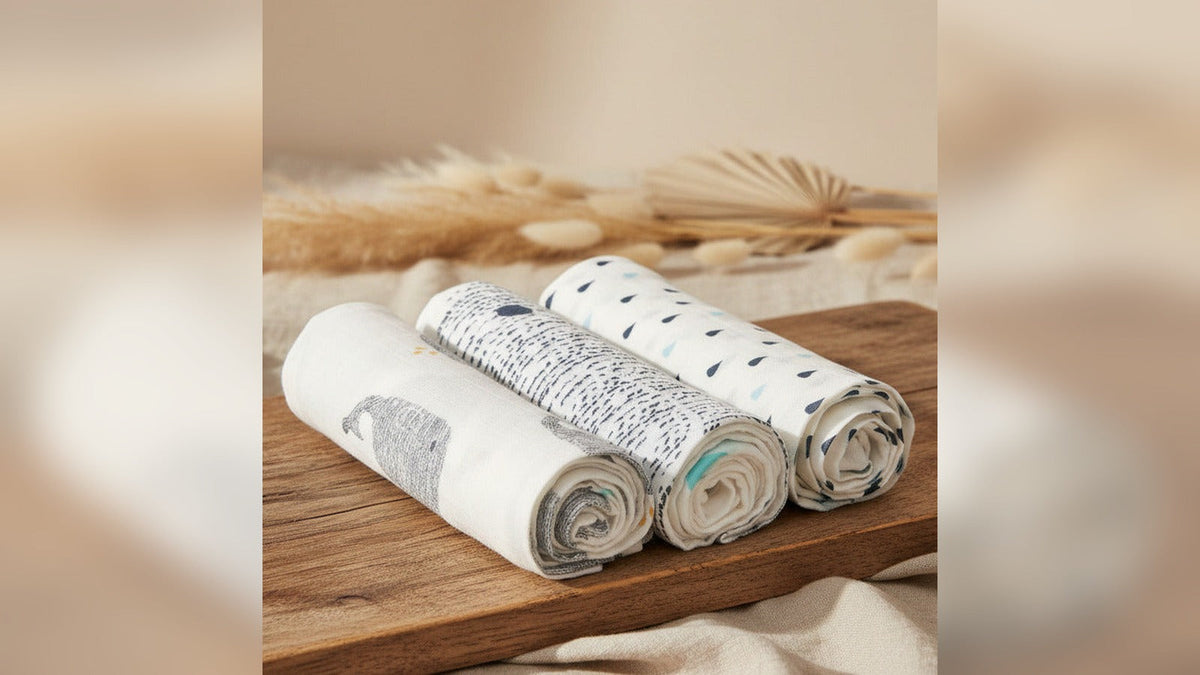
Lässig muslin cloths, set of 3
Three 80 × 80 cm cloths for use as a burp cloth, light underlay or everyday helper.
Lässig muslin cloths, set of 3
Jollein changing mat Twill Sand
A foldable mat with compartments, available plain or with plotter-film personalisation.
Jollein changing mat Twill Sand
Jollein document cover Twill Sand
Keeps maternity and child health documents together; plain or with a name in plotter film.
Jollein document cover Twill Sand
Schmatzepuffer rainbow baby blanket
A 70 × 100 cm organic-cotton blanket for quiet moments; use appropriately and under supervision.
Schmatzepuffer rainbow baby blanketDiscover baby changing and care
Frequently asked questions
How long does lochia last?
Often about six weeks, but shorter or longer courses can be normal. The trend and absence of warning signs matter more than a fixed end date.
Is lochia normal after a caesarean birth?
Yes. It is linked to healing in the uterus, not only to the vaginal birth route.
Can breastfeeding make it stronger?
Oxytocin can cause uterine contractions and temporarily redder or stronger flow. Ask for advice if the increase is marked or persistent.
How should lochia smell?
Usually neutral, slightly metallic or period-like. A clearly foul smell needs assessment.
Can I use tampons or a menstrual cup?
Pads are recommended early on. Wait until the postnatal check and individual approval before using internal products.
What if it becomes red again?
Activity or breastfeeding may cause a temporary change. Heavier persistent flow or additional pain, fever, clots, smell or dizziness needs assessment.
Conclusion
Lochia is a normal part of healing after birth. A gradual change from red and heavier to brown, yellowish and then white with decreasing volume is typical. Gentle hygiene, rest and access to a midwife help; warning signs should be assessed early.
