




























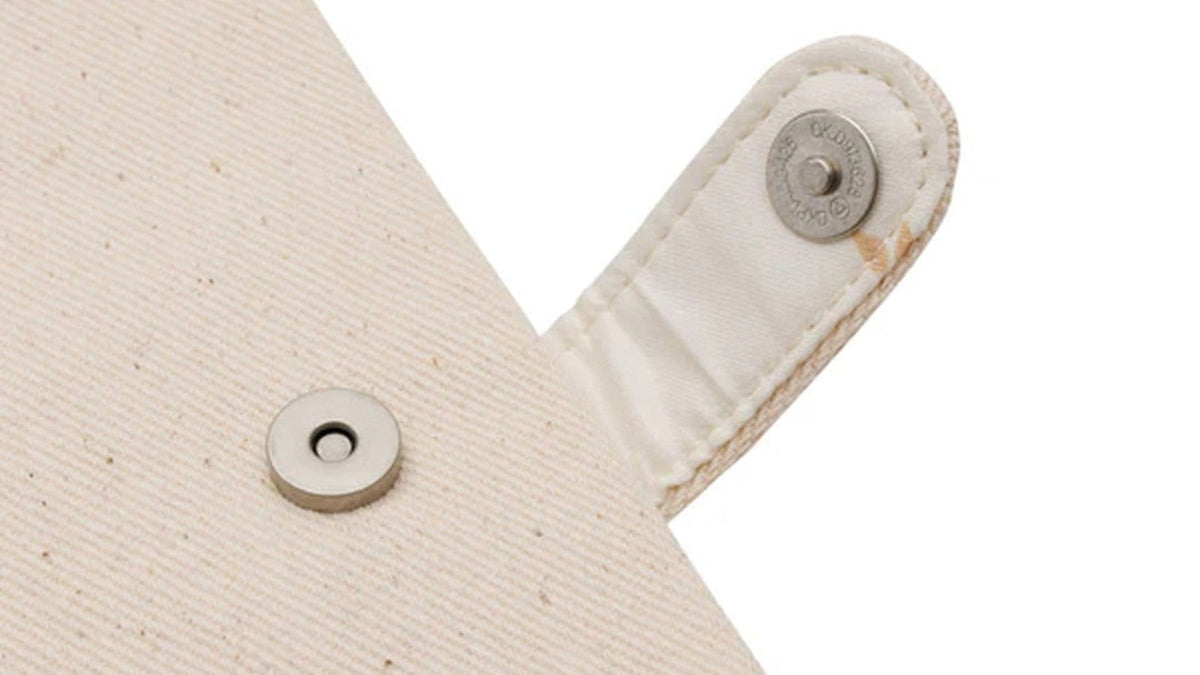
U-Health Booklet & Mother's Pass Cover Twill Sand
Keeps the mother's pass or U-health booklet close at hand and protects documents needed at midwife and doctor appointments.
To the document cover
What does the midwife do during the postpartum period? She supports the mother's physical recovery, monitors the baby's development, assists with breastfeeding or feeding, and answers the family's practical and emotional questions. During a home visit, she does not follow a rigid "check everything once" routine, but tailors the care to the current situation of mother and child.
The short answer: The midwife checks, among other things, the mother's uterine involution and wound healing, as well as the baby's general condition, weight development, and umbilical cord healing. In addition, she provides help with breastfeeding or bottle feeding, advice on baby care, and time for questions. In Germany, the entitlement to postpartum care generally covers the first twelve weeks after birth; details and frequency depend on need and the applicable health insurance regulations.
| Area | What the midwife typically supports | What parents can prepare |
|---|---|---|
| Mother | General condition, uterine involution, birth injuries or cesarean scar, breasts, and postpartum course | Note down symptoms and changes, have discharge documents ready |
| Baby | General condition, weight, umbilical cord, excretions, and age-appropriate care | Keep the baby's health booklet, weight data, and observations on feeding ready |
| Feeding | Breastfeeding position, latching, milk supply, or safe preparation and administration of bottle feeding | Openly describe questions and current routines |
| Family | Orientation in the new everyday life, conversation about the birth, emotional relief, and referral to further support if needed | Also collect questions from the partner or siblings |
Postpartum care is more than a weight check for the newborn. The midwife views the mother, baby, and feeding as an interconnected situation. She observes, advises, demonstrates techniques, and recognizes when a medical examination is advisable. A midwife does not replace a pediatrician, gynecologist, or general practitioner.
Regarding the mother, the midwife pays attention to her general and physical condition. According to the current contract on midwifery services, this includes, among other things, uterine involution, postpartum bleeding, the healing of possible birth injuries or a cesarean scar, as well as the breasts. She can provide advice on personal care, relief, and suitable initial exercises during the postpartum period.
It is important: You do not have to "keep symptoms to yourself" because they are supposedly part of the postpartum period. Describe changes as concretely as possible. In case of abnormalities, the midwife can recommend further examination by a doctor.
For the baby, the general condition, weight development, umbilical cord healing, and excretions are typical observations. The midwife also advises on daily care and the safe care of the newborn. Preventive examinations such as U2 and U3 remain medical appointments. For practical preparation, our checklist for the first pediatrician appointment is helpful.
Midwifery services include advice on breastfeeding and nutrition. With breastfeeding, the midwife can look at positions and latching techniques together with you. If you use bottle feeding, she can discuss preparation, feeding, and your questions about the individual routine. Good care does not judge families by their form of nutrition, but helps to care for the baby safely and according to their needs.
A birth and the first days afterward can be experienced very differently. The midwife provides space to talk about the birth, uncertainties, and the new family situation. She can recommend further resources if needed. If worries persist or intensify, it is right to seek professional help early.
For those with statutory insurance, the midwifery services contract, which has been in effect since April 1, 2026, regulates the possible scope. In the first ten days after birth, a total of up to 20 personal contacts are planned, with a maximum of two per day. From the eleventh day until the end of the twelfth week, up to 16 additional contact days are possible, generally no more than one per day. Further services generally require a medical order.
Important: These numbers are a range of services, not a fixed visit schedule for every family. How often the midwife actually comes depends on individual needs, agreement, and the specific care situation. Conditions may differ with private insurance; clarify them directly with your plan and the midwife.
The statutory entitlement to midwifery services during pregnancy, birth, and the postpartum period is anchored in § 24d SGB V. Practically, it is worth looking for a postpartum midwife during pregnancy and discussing the planned care framework early.
The first visit usually begins with a conversation: How was the birth? How are mother and baby doing? How is the drinking going, how are sleep and excretions, what questions have arisen since discharge? Afterward, the midwife examines or observes what is currently important in your situation.
You do not need to tidy up or present a perfect daily routine for this. The postpartum period is a time for recovery. A quiet place, clean hands, and the most important documents are enough. An unsettled, hungry, or sleeping baby is also no problem; the midwife knows real family life.
If you are also sorting out administrative tasks in addition to care, you will find a separate overview for registering the baby in our guide. Information on the protection period after birth is available in the post about maternity protection after birth.
| Contact person | Typical task | Example |
|---|---|---|
| Midwife | Postpartum observation, advice, instruction, and assessment of mother and baby | Breastfeeding or feeding, uterine involution, umbilical cord care, weight development |
| Pediatric practice | Medical examination, preventive care, diagnosis, and treatment of the baby | U-examinations, illnesses, medical clarification |
| Gynecological or general practitioner's office | Medical diagnosis and treatment of the mother | concerning course of healing, severe or persistent symptoms |
If in doubt, it is better to ask again. In acute emergencies, call 112. This guide explains the usual framework but does not replace a personal medical assessment.
Ask your health insurance company about midwife lists or regional search options and contact the maternity clinic or birth center. Midwife centers, municipal early intervention services, or family centers may also know about regional offers. Some midwives work in outpatient clinics or teams, so the same person does not always handle every contact.
Regardless of this, let medical preventive appointments take place. If you have symptoms or worries, do not wait for an available midwife appointment, but contact the responsible medical practice or the emergency services in case of emergency.
The following products do not replace midwifery services. They can only help to organize documents and small everyday situations clearly. All shown items were active during the editorial review and available in at least one version.
Keeps the mother's pass or U-health booklet close at hand and protects documents needed at midwife and doctor appointments.
To the document cover
A compact mat for on the go or for a flexibly set up changing area in the first weeks.
To the changing mat
A large, versatile cloth for spit-up protection, as a mat, or for light covering in everyday life – always use it appropriately for the respective situation.
To the muslin cloth
For families who want to capture small developments and memories from the first year without much effort.
To the milestone cardsPractical for the first baby time
In the baby essentials, you will find textiles and accessories for your own everyday life – choose consciously according to actual needs.
View baby essentialsThe midwife in the postpartum period combines observation, practical instruction, and advice. She supports the mother's recovery, the baby's development, and the arrival as a family. You benefit most when you openly address questions and do not postpone uncertainties until the next planned visit.
A visit from family and friends has a different role. How it really relieves you is explained in our guide Postpartum visit: What visitors should consider.
Those with statutory insurance generally have entitlement to postpartum care until the end of the twelfth week after birth. Beyond that, further services are possible in case of medical necessity and medical order.
Not automatically. In the first ten days, up to two contacts daily are possible depending on need. The concrete rhythm is agreed individually.
Typical are general condition, weight development, umbilical cord healing, and excretions. She also advises on nutrition, care, and safe everyday life with the newborn.
Yes. Postpartum care includes, among other things, the observation of uterine involution, postpartum bleeding, breasts, as well as the healing of birth injuries or a cesarean scar.
Weight development is an important part of the care. How often it is weighed is decided by the midwife based on the individual situation and the already available values.
Yes, if the mother wants that. It is even helpful if a partner asks questions and learns care or feeding steps.
Clarify with the midwife how and when she is reachable. In case of symptoms or medical worries, contact the responsible medical practice directly; in acute emergencies, call 112.
Sources and status: § 24d SGB V; Contract on the provision of midwifery services according to § 134a SGB V, valid since April 1, 2026; Austrian Midwife Association, professional overview on postpartum care. Status of the editorial review: October 3, 2026. The post serves for general information and does not replace individual medical advice.
