
How long does maternity leave last after birth? Deadlines explained
How long maternity protection actually lasts after birth therefore depends not only on the baby's birthday. The decisive factors are the expected delivery date, the actual date of birth, and any potential legal special cases. This guide explains the rules in a clear way for dependent employees in Germany. It does not replace individual legal advice; in the case of a special employment relationship, uncertainty regarding calculations, or questions about benefits, please contact your health insurance provider, employer/HR department, and the relevant supervisory authority.
Maternity protection after birth: an overview
Important: "Maternity protection" (Mutterschutz) and "maternity protection period" (Mutterschutzfrist) are not the same thing. Maternity protection encompasses various rights, such as health protection, protection against dismissal, and income protection. The maternity protection period is the specific timeframe around the birth during which the mother is generally not allowed to be employed.
How is the end of the maternity protection period calculated?
The starting point is the actual day of birth. In the normal case, an eight-week protection period follows. For an accurate calculation, parents should not just count the days on the calendar themselves: employers and health insurance companies require the actual date of birth and also take into account the previously certified expected due date.
The baby arrives on the expected due date
Then the clear standard case applies: six weeks of protection before the birth and eight weeks after. In total, the maternity protection period usually comprises 14 weeks. Before the birth, an employee may continue to work at her own express request and can revoke this request at any time. After the birth, she generally cannot waive the protection period.
The baby arrives earlier than expected
In the event of a birth before the expected due date, the unused days of the pre-birth protection period are not lost. They are added to the time after birth. Example: If the child is born ten days before the expected due date, the protection period normally ends ten days later than just eight weeks after the birthday.
However, an early birth is not automatically a medical premature birth in the sense of the extended protection period. Whether a premature birth exists is medically determined and certified. In this case, twelve weeks apply after birth; in addition, the days not used before delivery are added.
The baby arrives after the expected due date
If the birth takes place later, the time before the birth is extended until the actual date of birth. The eight weeks after birth are not shortened by this. The entire protection period in this case lasts longer than 14 weeks.
When does twelve weeks of maternity protection apply after birth?
The postnatal protection period is extended from eight to twelve weeks in three legally defined situations:
- in the case of a medical premature birth,
- in the case of a multiple birth – for instance with twins or triplets,
- in the case of the birth of a child with a disability, if the disability is medically diagnosed within the first eight weeks and the mother applies for the extension from her health insurance company.
Is the mother allowed to work during the protection period?
After birth, an absolute prohibition on employment generally applies to employees. Even if the mother feels fit or wants to work voluntarily, the employer is not allowed to employ her during this time. There is a special exception for schoolgirls and students: under legal conditions, they can expressly request to resume their activities before the period expires, and they can revoke this declaration at any time.
Before birth, the rule is different. In the six weeks before the expected due date, the pregnant woman may continue to work voluntarily. The employer may not demand this, and consent can be withdrawn at any time.
Maternity protection, maternity pay, and parental leave
These three terms are frequently conflated, but they have different functions. The maternity protection period prevents employment around the time of birth. Maternity pay (Mutterschaftsgeld) and, where applicable, the employer's supplement, secure income during this time according to the respective conditions. Parental leave (Elternzeit) is a separate period of release that parents must apply for or request from their employer.
Anyone wanting to clarify benefits should contact their own health insurance provider at an early stage. The exact payment depends, among other things, on insurance status and employment relationship. For those with private insurance, the self-employed, civil servants, or those in multiple parallel jobs, different responsibilities and rules may apply.
What parents should practically take care of after birth
The first few days with a baby are busy. A short checklist helps ensure that correct deadline calculations and benefits don't get lost between birth certificates, appointments, and family visits.
- Notify the actual date of birth: The employer/HR department and health insurance company need the information for the final calculation.
- Submit certificates: In the case of a medical premature birth or another special case, submit the required medical certificate promptly.
- Apply for an extension, if necessary: In the case of a child's disability diagnosed within the first eight weeks, the extension is not granted without an application; the health insurance company is the correct first point of contact.
- Check benefits: Clarify maternity pay and potential employer supplements based on personal insurance and employment status.
- Plan parental leave separately: It is not identical to the maternity protection period. Therefore, coordinate deadlines and desired periods separately with your employer.
For other administrative matters, our guide Registering your baby after birth: documents, authorities, and deadlines is helpful. Those who organize things before delivery will also find a discreet checklist for the hospital bag. And for family and friends, the article on considerate postnatal visits explains what really takes the pressure off parents.
Organizing documents and keepsakes
Specific products are not necessary for the maternity protection period. However, it can be practical to keep medical documents, the child's check-up booklet (U-Heft), certificates, and personal keepsakes separate and within reach from the start. These four available products supplement the organization or preservation of these early times without replacing the legal core of this guide.
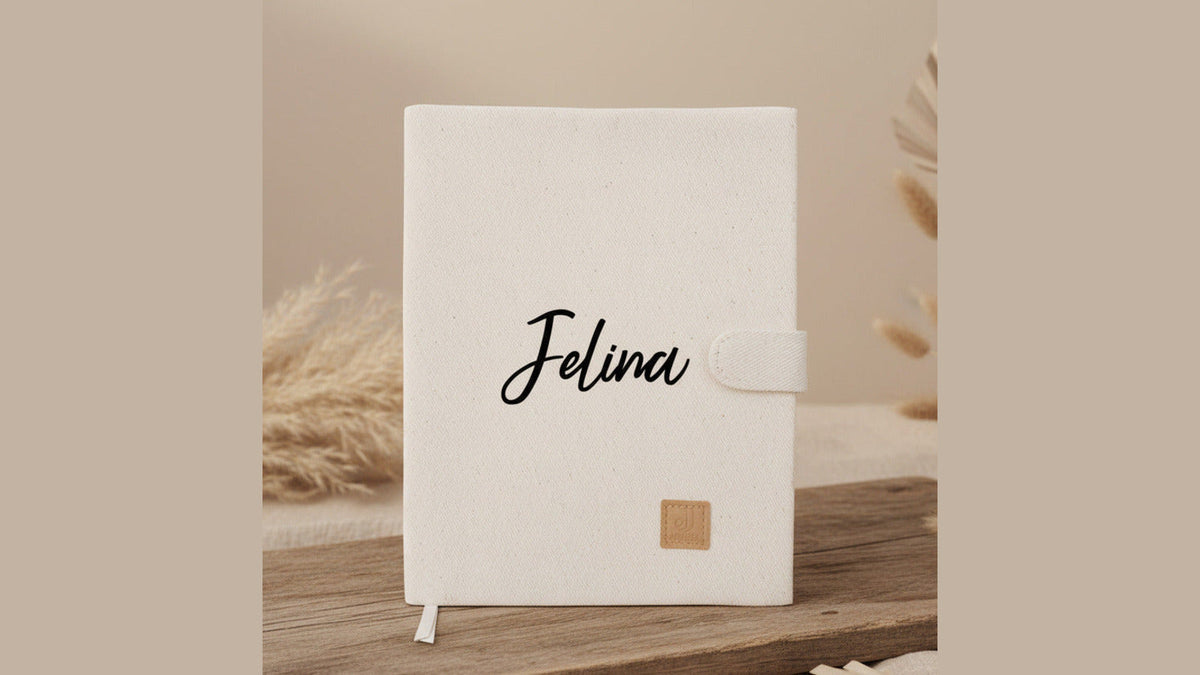
 Maternity/Check-up Booklet Cover Twill SandHelps keep important baby documents protected and easy to find – optionally with a name.
 Baby Journal "My First Year"Pre-designed pages for photos, first dates, and personal memories from the baby's first year.
 Milestone cards for baby's first yearA simple way to capture special developmental steps in photos with a date.
 Memory Box Flowers & ButterfliesFor birth cards, photos, and small keepsakes that shouldn't be mixed in with official documents.
Typical planning mistakes
Counting only eight weeks from the birthday
In the event of an early birth, this can lead to an incorrect end date, because unused days before birth are added on. The calculation based on the expected and actual date is authoritative.
Classifying every early birth as a premature birth
"Before the due date" and "medical premature birth" are not automatically the same thing legally. The twelve-week period requires the corresponding medical determination.
Equating maternity protection and parental leave
The protection period arises by law; parental leave is a separate period with its own notification and planning requirements. Confusing the two risks unnecessary queries from the employer.
Clarifying special cases too late
Parents should not wait, especially when applying for an extension due to a child's diagnosed disability. The health insurance company can say which documents are required in the specific case.
Conclusion
After birth, the maternity protection period usually lasts eight weeks. Twelve weeks apply in cases of medical premature birth and multiple birth, as well as upon application if a disability of the child is diagnosed within the first eight weeks. In the case of a birth before the expected due date, the unused pre-birth days are added. Therefore, the safest end date is provided by the health insurance company and employer based on the certificates – not a blanket calendar calculation.
Frequently asked questions about maternity protection after birth
How long does maternity protection last after a normal birth?
As a rule, the protection period ends eight weeks after birth. If the child arrives earlier than expected, unused days from the time before birth are added.
When is maternity protection twelve weeks?
Twelve weeks after birth apply in cases of medical premature birth and multiple birth. If a disability of the child is diagnosed within the first eight weeks, the mother can apply to her health insurance company for an extension.
Does a C-section extend maternity protection?
No, there is no special legal extension solely because of a C-section. If a statutory special case is also present, its longer protection period applies.
Am I allowed to work earlier voluntarily after birth?
For dependent employees, there is generally an absolute prohibition on employment after birth. A legal exception exists for schoolgirls and students, who can expressly request an earlier resumption of activity under the intended conditions.
Who confirms the exact end of maternity protection?
Employers and health insurance companies calculate the period based on the expected and actual delivery date as well as any certificates. In cases of uncertainty, the relevant maternity protection supervisory authority is another point of contact.
Does parental leave begin automatically after maternity protection?
No. Parental leave and maternity protection are different regulations. Parental leave must be planned separately and requested from the employer in a timely manner.
- Federal Family Portal: Maternity Protection
- Maternity Protection Act, § 3 – Protection periods before and after delivery
- Federal Ministry: Guide to Maternity Protection
The information relates to the general legal situation for employees in Germany. Individual insurance, employment, or health questions should be clarified with the respective responsible bodies.
