

The short answer: A well-packed hospital bag is best organized in two parts: a small, easily accessible bag for the delivery room and admission, and a second bag for the postnatal ward. The most important items to include are documents, comfortable clothing, toiletries, a mobile phone with a charging cable, and a weather-appropriate outfit for the baby’s trip home. You should check directly with the hospital beforehand to see what they provide.
Don't pack for every conceivable situation, but for three phases: Arrival and Birth, Stay, and Trip Home. This keeps essentials easy to find and leaves unnecessary bulk at home.
Hospital bag for birth: the overview
| Area | What belongs inside | Where to stow it? |
|---|---|---|
| Documents | Maternity record, ID, health insurance card, and documents required by the hospital | In a labeled folder right at the top |
| Delivery room | Comfortable top, warm socks, non-slip slippers, lip balm, drink, snack (if approved by the clinic), smartphone, and long charging cable | Small bag, immediately accessible |
| Postnatal ward | Loose clothing, underwear, toiletry bag, towel (only if required), glasses or contact lens accessories | Second bag or separate compartment |
| Baby and trip home | Bodysuit, sleepsuit or trousers with a top, socks, hat, and—depending on the weather—a jacket, overall, or blanket | Complete set together in one pouch |
| Accompanying person | Drink, snack, change of shirt, toiletries, charger, important phone numbers | Their own small pouch |
When should you pack the hospital bag?
A sensible timeframe is towards the end of your pregnancy. The Federal Centre for Health Education (BZgA) indicates in its information for the 33rd to 36th weeks of pregnancy that you can start preparing the hospital bag during this phase. This is a guideline, not a deadline: in specific pregnancy situations or an anticipated early birth, your medical professional may advise you to prepare sooner.
A two-step approach is practical: first, gather everything you don't need on a daily basis. Items like your smartphone, charging cable, glasses, or current medication should be added to a short "pack last" list. Keep this list visible on top of the bag.
1. Documents: These must be ready first
The document folder should not be buried at the bottom under your clothes. Which documents are necessary depends on the hospital and your personal situation. Frequently mentioned items include:
- Maternity record (Mutterpass)
- ID card or passport
- Health insurance card
- Registration documents for the birth or a referral slip, if required by the clinic
- Allergy pass and relevant medical findings, if available
- Documents for the birth certificate as specified by the responsible registry office and the hospital
A family record book (Familienstammbuch), the parents' birth certificates, marriage certificate, or an existing acknowledgment of paternity may be relevant depending on your marital status and the clinic. Do not rely on a general internet list here: the admission and registry office information provided by your chosen birthing hospital is decisive.
2. Small delivery room bag: little, but immediately accessible
In the delivery room, speed of access is more important than quantity. Hospitals often recommend a loose, comfortable top, warm socks, and non-slip slippers. A hair tie, lip balm, and a long charging cable are small things that can be practical during a longer stay.
Drinks and small snacks are also frequently mentioned. It is best to check with the birthing team regarding what is sensible or permitted during labor. Medical requirements and the specific situation always take priority.
Document folder, comfortable top, socks, slippers, hair band, lip balm, smartphone, long charging cable, drink, and a little something for the accompanying person.
3. Postnatal ward: Clothing and care without overpacking
For your stay, loose clothing that doesn't pinch and is easy to change into is ideal. Pack clothes you feel comfortable in rather than buying a special "hospital outfit." A toiletry bag containing dental care, shower and hair care products, a brush, and personal care items is usually sufficient.
Many hospitals provide certain items during your stay, such as maternity pads, towels, or baby clothes. Other hospitals ask you to bring individual items yourself. This is exactly why a quick call or a look at the hospital’s own checklist saves more space than any general packing list.
Regularly used medications should only be packed in the bag following personal medical consultation. A general blog list cannot replace the individual advice of your doctor, midwife, or the hospital.
4. What does the baby need in the hospital?
For the baby, you often only need one complete set for the discharge, suited to the current season. The München Klinik, for instance, mentions a bodysuit or undershirt, sleepsuit, warm socks, a hat, and—depending on the weather—an extra layer or blanket. Some hospitals provide clothing and diapers during your stay, while others have different procedures.
Pack the "trip home" set together in a fabric bag so the accompanying person doesn't have to look for individual parts. You will need a suitable infant car seat for the drive; it can usually stay in the car until discharge. Manufacturer instructions and correct installation are crucial.
Loose blankets, cloths, or cuddly toys should not be left unsupervised in a newborn's sleeping area. Use textiles only as appropriate for the specific situation and follow the instructions of the hospital staff.
5. Don't forget the accompanying person
An accompanying person does not need a second large suitcase. A drink, a snack, a change of shirt, personal care items, their own charger, and some cash or a card are sensible. Additionally, save the address, parking options, and important phone numbers on their smartphone in advance.
It may be the accompanying person's task to bring the postnatal bag or car seat later. This works particularly well if both bags are clearly labeled and the discharge set is kept in a known location.
What can usually stay at home?
- Too many baby outfits: One complete set plus a sensible backup is usually sufficient for discharge.
- Large containers: Personal care products can be packed in space-saving travel sizes.
- Valuables: Jewelry and unnecessary tech only increase the risk of loss.
- Unverified special equipment: Check first what the hospital or birthing center provides.
- Rigid plans: An organized bag helps, but it must be adapted to the individual advice of the birthing team.
Four practical products for the trip home and baby life
This selection does not replace hospital equipment. It is suitable for the discharge set or for the first time at home. All items shown were checked immediately prior to publication as active products with at least one available variant.

Muslin cloths 70 x 70 cm, 2-pack
Compact cloths for everyday life with a baby. Please observe the manufacturer's care and safety instructions before use.
View muslin cloths
Muslin cloths Blueberry Leaves and Sage
A subtle 2-pack as a practical addition to newborn essentials.
Discover set
Striped short-sleeve bodysuit
A bodysuit can be part of the discharge set. The size and additional clothing should match the season and the baby.
Check available sizes
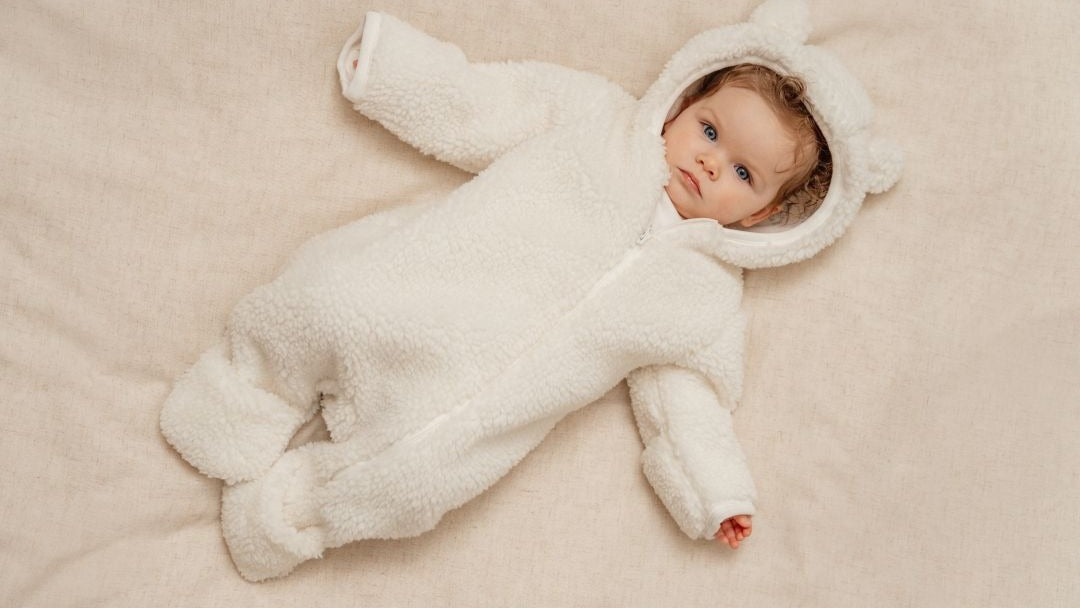
Baby Bunny teddy sleepsuit
A warmer option for the trip home in suitable weather. Not suitable for every season.
View teddy sleepsuitTypical packing mistakes
Putting everything in one big bag
This often leaves the most important items at the bottom. A small delivery room bag plus a second ward bag is clearer.
Not checking your hospital's list
Hospitals differ regarding documents, baby clothes, towels, and consumables. The local checklist takes precedence.
Not adjusting the discharge set to the weather
An outfit shouldn't be finalized months in advance. Check the season and the current conditions shortly before the date.
Packing too many new items
Familiar, comfortable clothing is often more pleasant. New textiles should be prepared and washed according to manufacturer instructions, if applicable.
Conclusion: Clarity beats an overstuffed bag
A good hospital bag doesn't contain as much as possible, but makes the right things easy to find. Start with documents, pack the delivery room and ward items separately, and keep the complete discharge set together. Finally, check your birthing hospital's specific requirements and adjust the list to your personal situation.
For the time after discharge, our baby essentials checklist provides additional help. It follows a different search intent and covers everyday life at home, whereas this guide exclusively treats the hospital bag.
Common questions about the hospital bag
In which week of pregnancy should the hospital bag be ready?
The 33rd to 36th weeks of pregnancy is a common timeframe to start preparing. In the case of individual risks or a potential earlier birth, follow the recommendation of your medical team.
Do you need one or two bags?
Two clearly separated areas are particularly practical: a small bag for admission and the delivery room, and a second for the ward. These do not necessarily have to be two separate pieces of luggage.
Which documents belong in the hospital bag?
Usually the maternity record, ID, and health insurance card. Other documents depend on the clinic, your marital status, and your birth registration.
Does baby clothing need to go into the hospital bag?
At least one weather-appropriate outfit for discharge is useful. Your chosen hospital can tell you if clothing will be provided during your stay.
Do you need diapers and postnatal items?
This varies by hospital. Many houses provide consumables; a general statement is therefore less reliable than the hospital's own checklist.
What goes in the accompanying person's bag?
A drink, snack, change of shirt, toiletries, smartphone, and charger are often enough. Also important are directions, parking options, and phone numbers.
What changes for an outpatient birth or a scheduled C-section?
Length of stay and required clothing may differ. Discuss the packing list in advance with your hospital, midwife, or medical team; this general guide does not replace individual advice.
- gesund.bund.de: Childbirth preparation
- Federal Centre for Health Education (BZgA): Hospital bag checklist
- University Medical Centre Mannheim: The delivery room bag
- München Klinik: Packing the hospital bag for birth
Editorial review date: September 26, 2026. The information provided by your chosen birthing hospital and your personal medical consultation remain the authoritative sources.
